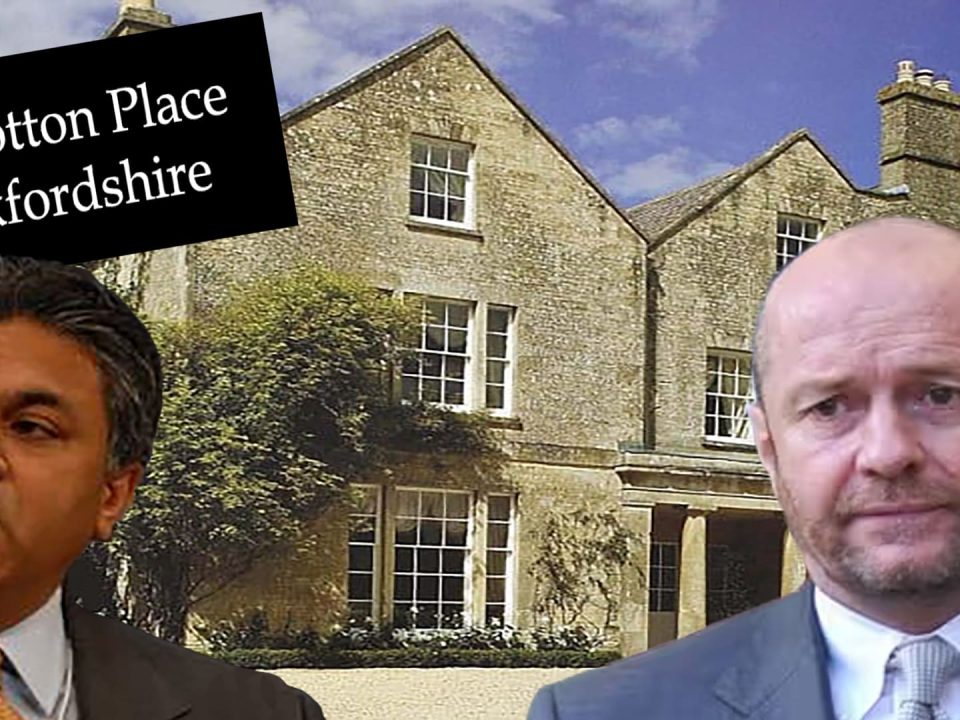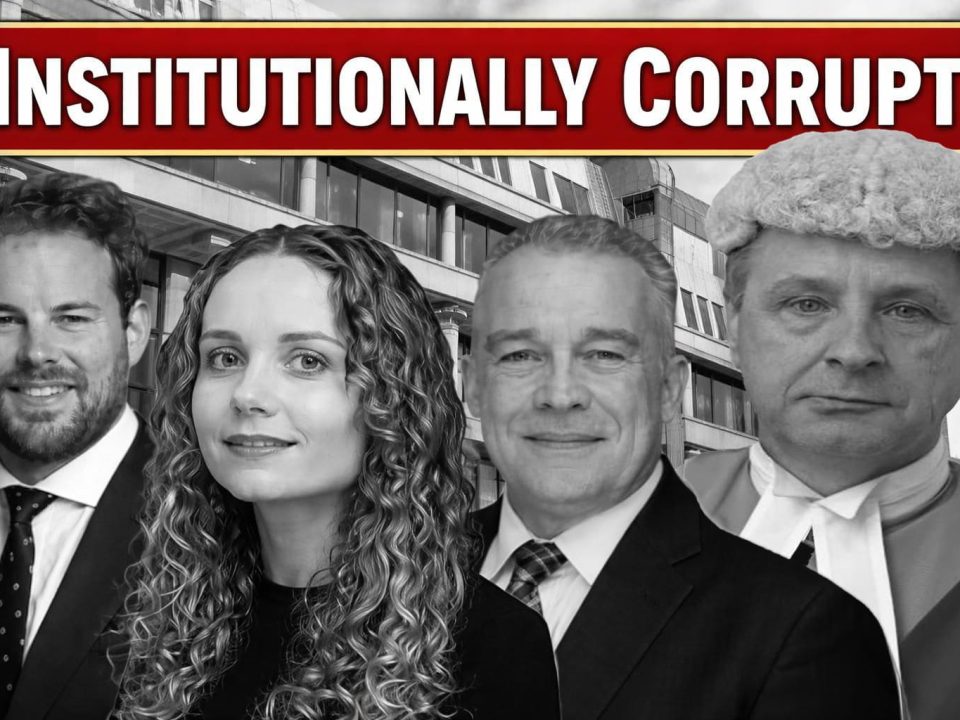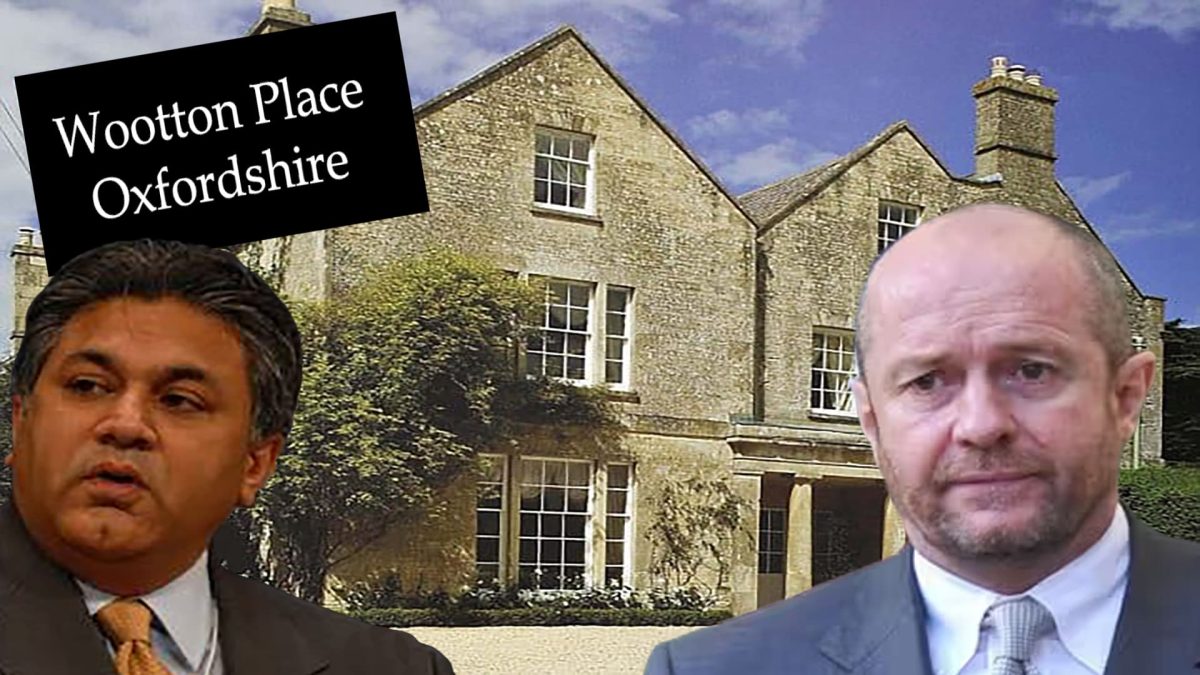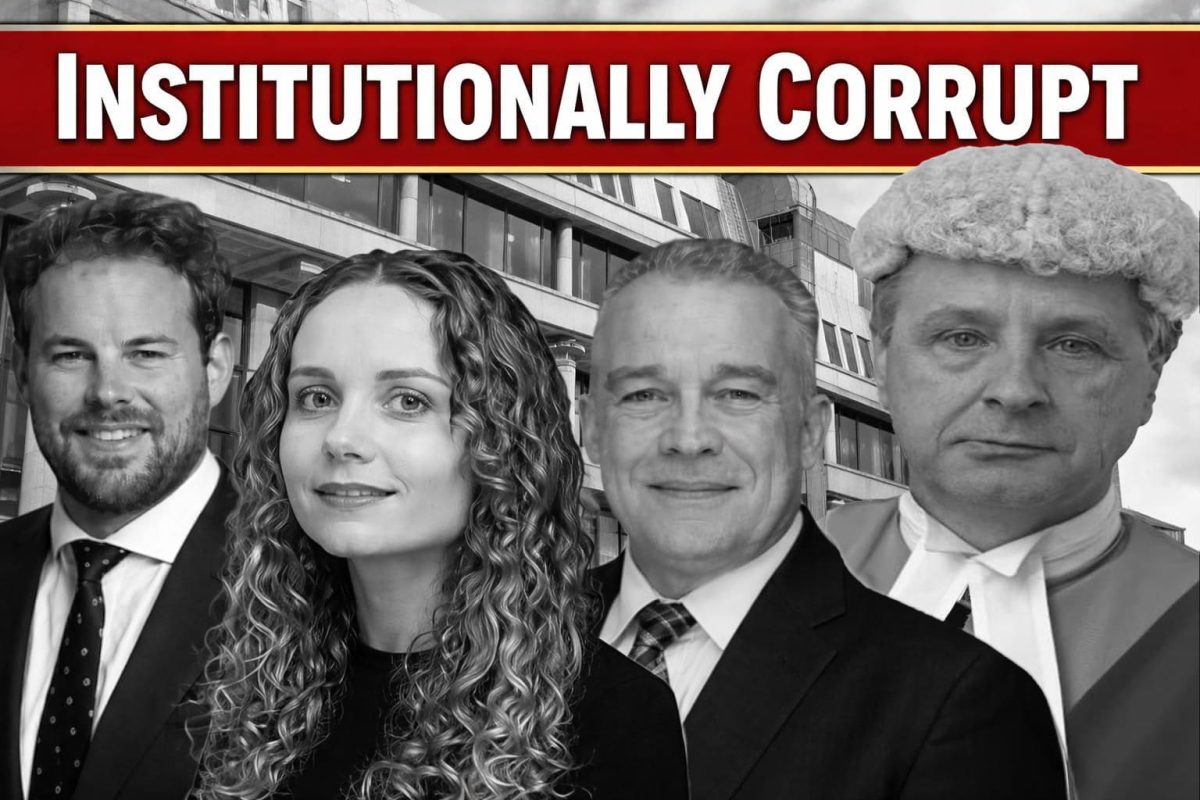
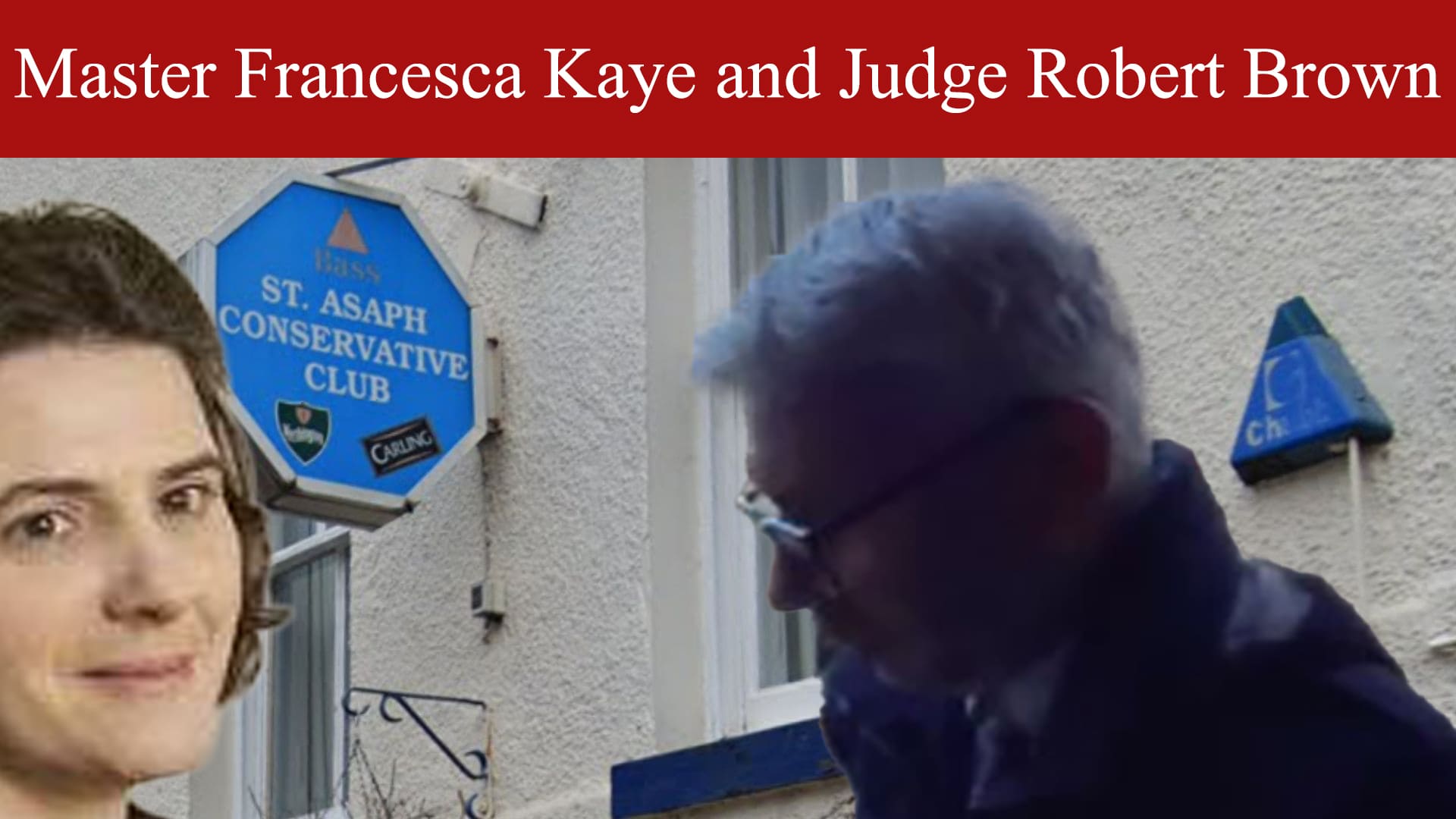
Master Francesca Kaye (left) and right (as pictured at the litigant’s doorstep) First Tier Tribunal Judge Robert Brown
A devastating double-salvo of official complaints has plunged the UK’s judicial watchdog into a high-stakes investigation, exposing what we are calling a “systemic culture of hostility and procedural lawlessness” toward unrepresented citizens.
Leaked forensic dossiers submitted to the Judicial Conduct Investigations Office (JCIO) reveal a shocking catalog of allegations against two senior judicial figures: First-tier Tribunal Judge Robert Brown and High Court Master Kaye.
It all started when mathematician, Cam Askan made claims of harassment and causing a nuisance, after St Asaph Conservative Club had installed CCTV intruding on and overlooking Mr Askan’s residence and private space.
Mr Askan owns the former St Asaph’s HSBC bank, on the High Street, having purchased the property in 2019.
There was a heated legal dispute, involving the former trustee of St Asaph Conservative Club, now deceased David Gwyn Williams.
Williams became aggressive towards towards Askan during the appeal proceedings,
Mr Williams “smelled of alcohol” and “attempted to strike” Mr Askan, yet this abuse was whitewashed by the Judge.
In the Judge’s reasoning it was said that “It is clear that the judge intervened immediately, robustly and properly when Mr Williams spoke or pointed aggressively at Mr Askan, and when later he used threatening language when being questioned.” A starkly different account of what Mr Askan said happened.
From secret, CCTV-captured meetings during site visits to “Easter recess ambushes” and dismissive, pen-flicked insults on official court orders, the documents paint a damning portrait of a legal system that appears to have closed ranks against a single litigant in person.
PART I: THE SECRET CCTV AT ST. ASAPH
The Case of Judge Robert Brown
The first scandal centers on a bitter property dispute (Case REF/2024/0620) between St Asaph City Council and local resident Mr. Cam Askan. What should have been a standard land registration hearing descended into a thriller-like drama of surveillance and undisclosed ex parte contact.
According to the JCIO filing, on January 13, 2026, Judge Robert Brown arrived in St. Asaph to conduct an official site inspection. What he did not realize was that the entire area was monitored by high-definition CCTV.
The footage, subsequently reviewed by the complainant, reportedly caught Judge Brown engaging in a private, one-on-one conversation lasting more than five minutes with the Council’s solicitor, Mr. Owen—entirely outside the presence of the complainant.
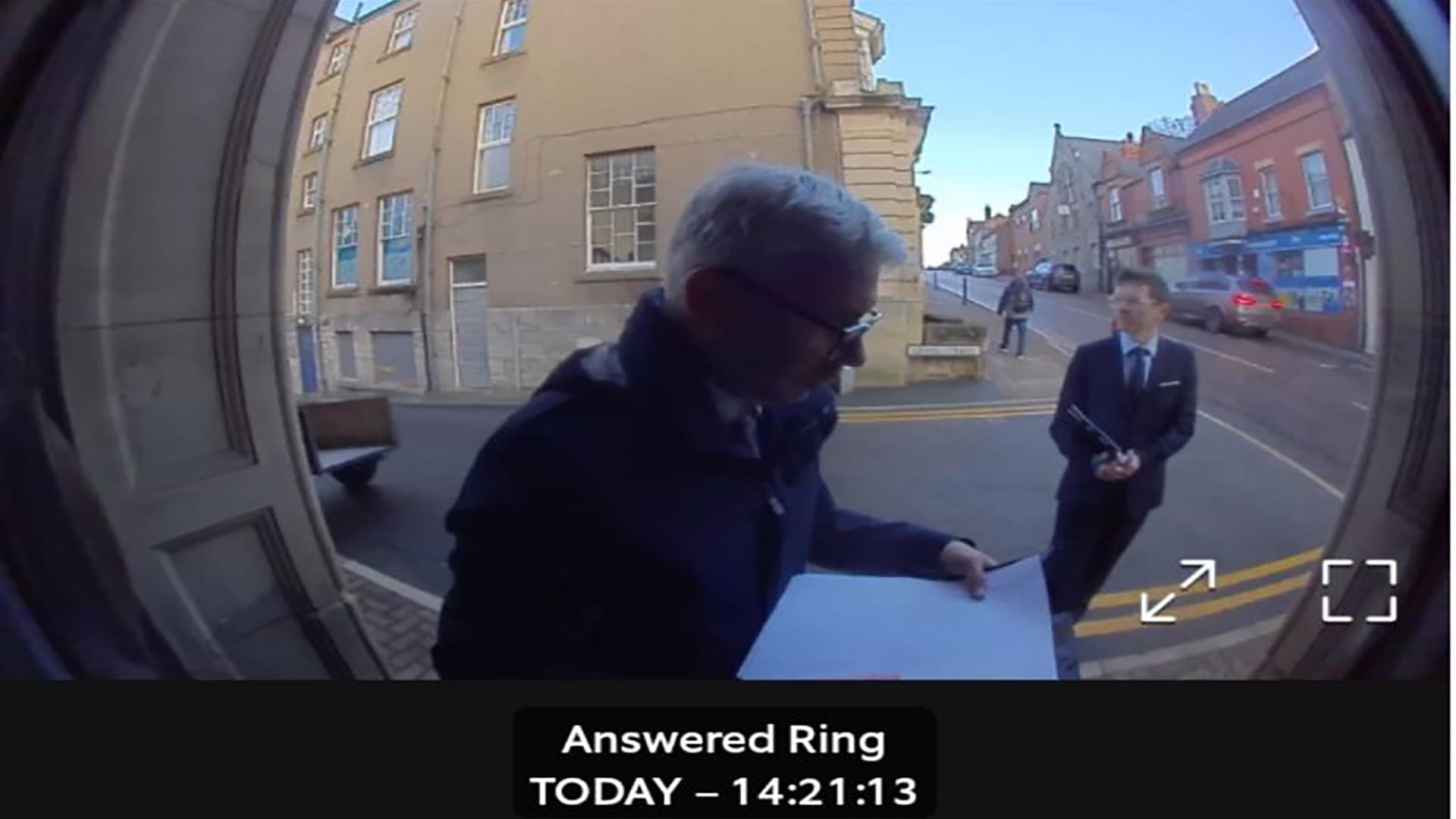
Judge Robert Brown is caught on camera on Mr Askcan’s doorstep!
For more than two months, this contact remained completely undisclosed to the court administration or the complainant. It was only when Mr. Askan confronted the Tribunal with the CCTV evidence that the Judge was forced to address it.
But the cover-up, critics say, was worse than the event. In his subsequent Order of April 10, 2026, Judge Brown attempted to minimize the incident. Yet, his own written rulings contain glaring, self-defeating contradictions:
- At paragraph 20, the Judge admits he was alone with the Council’s solicitor.
- At paragraph 24, the Judge boldly asserts “there was no private conversation.”
“These two statements cannot both be true,” says a legal analyst reviewing the papers. “Either they were alone and speaking, or they weren’t. You cannot have a ‘non-private’ conversation when you are the only two people standing on a street corner.”
Even more bizarrely, the dossier reveals that Judge Brown—accompanied by the Council’s barrister—personally marched up to Mr. Askan’s private residence and rang his Ring doorbell in an apparent attempt to “persuade” him to participate in the site visit, despite Mr. Askan having formally notified the court of his non-attendance. Technical specifications from Ring support teams confirm the two men were standing within one meter of the door, shattering the Judge’s written claim that the opposing barrister was merely “in the background.”
The Alleged Retaliation The climax of the drama occurred during a virtual hearing on May 20, 2026. After Mr. Askan’s barrister, Mrs. Quadri, publicly raised questions about the Judge’s undisclosed associations—including whether he had attended the elite Garrick Club as a guest during the tenure of former Senior President of Tribunals Sir Keith Lindblom—the atmosphere turned toxic.
Judge Brown spontaneously blurted out, “I did not take instructions from Sir Keith Lindblom”—a defensive statement addressing a question nobody had asked.
When Mr. Askan departed the hearing in protest of what his counsel described as an “asymmetry of evidential rigour,” Judge Brown retaliated. In a direct and unexplained reversal of his own April 10 ruling—where he had explicitly decreed that “withdrawing cooperation” does not mean withdrawing a case—the Judge immediately issued an order treating Askan’s departure as an absolute withdrawal of his entire case, handing a total victory to the Council.
PART II: THE EASTER RECESS AMBUSH
The Case of Master Kaye
If Judge Brown’s conduct represents a breach of basic transparency, the actions of High Court Master Kaye in the Chancery Division (Case PT-2025-001120) represent what reformers call “procedural steamrolling.”
Mr. Askan had brought a High Court claim against HM Land Registry (HMLR), alleging serious mistakes in boundary plotting and misfeasance in public office. HMLR fought back with a reverse summary judgment application.
What followed was a masterclass in bureaucratic exclusion:
- The Recess Listing: Master Kaye listed the critical, potentially claim-ending hearing for April 8, 2026—during the Easter recess—knowing the unrepresented complainant had stated he could not attend.
- The 24-Hour Recusal Dismissal: Panicked by the apparent lack of neutrality, Mr. Askan filed a formal recusal application on April 7. Instead of transferring the matter to an independent judge, Master Kaye listed, heard, and dismissed the recusal application herself on April 8, in Askan’s absence, before immediately proceeding to wipe out his entire substantive lawsuit the very same day.
- The Silent Treatment: Following the hearing, Master Kaye asked Mr. Askan to submit written answers regarding the disputed boundary lines. Askan complied on April 13. Yet, when the final Judgment was handed down, his submissions were completely ignored. Master Kaye further excluded or ignored critical expert evidence, including a forensic report by expert O’Rorke.
The coup de grâce, however, was delivered in the official sealed N460 form—the document where judges must state their reasons for granting or denying permission to appeal.
Faced with a litigant in person trying to access his statutory right to appeal a devastating £27,000 costs order, Master Kaye penned an extraordinary, petulant phrase that has sent shockwaves through the legal community:
“He is not entitled to have another go.“
“This is not judicial reasoning; it is playground condescension,” says Intelligence UK Investigations, a firm who privately investigates allegations of judicial misconduct.
“To use language like ‘not entitled to have another go’ to describe a citizen’s right to seek appellate review is, in our view, a direct violation of the Guide to Judicial Conduct, which mandates courtesy, patience, and tolerance.“
A SYSTEM IN CRISIS
Both cases, occurring almost simultaneously in the spring of 2026, highlight a terrifying reality for ordinary citizens forced to navigate the UK court system without expensive legal teams.
When litigants in person stand up for their rights, point out undisclosed conflicts of interest, or object to procedural unfairness, the system’s response appears to be swift, punitive, and defensive.
The JCIO is now facing immense pressure to conduct a fully transparent, independent investigation. With physical CCTV footage, Ring doorbell data, and black-and-white contradictions in signed judicial orders forming the bedrock of these complaints, the watchdog will find it incredibly difficult to sweep these allegations under the rug.
For Mr. Askan, the battle moves to the appellate courts. But for the British public, these disclosures raise a chilling question: When the judges themselves break the rules of fair play, who is left to police the courts?
Related posts
Left: (1) Lord Justice Arnold - then High Court Judge - Sir Richard Arnold. Centre: (2) Lord Justice Nugee - then Mr Justice Nugee / Sir Christopher Nugee - High Court Judge. Right: The current Master ofthe Rolls and Head of Civil Justice for England & Wales, Sir Geoffrey Vos, then, Chancellor of the High Court - when they engaged in fraudulent acts.