
Justice denied with misuse of civil restraint orders
May 18, 2026
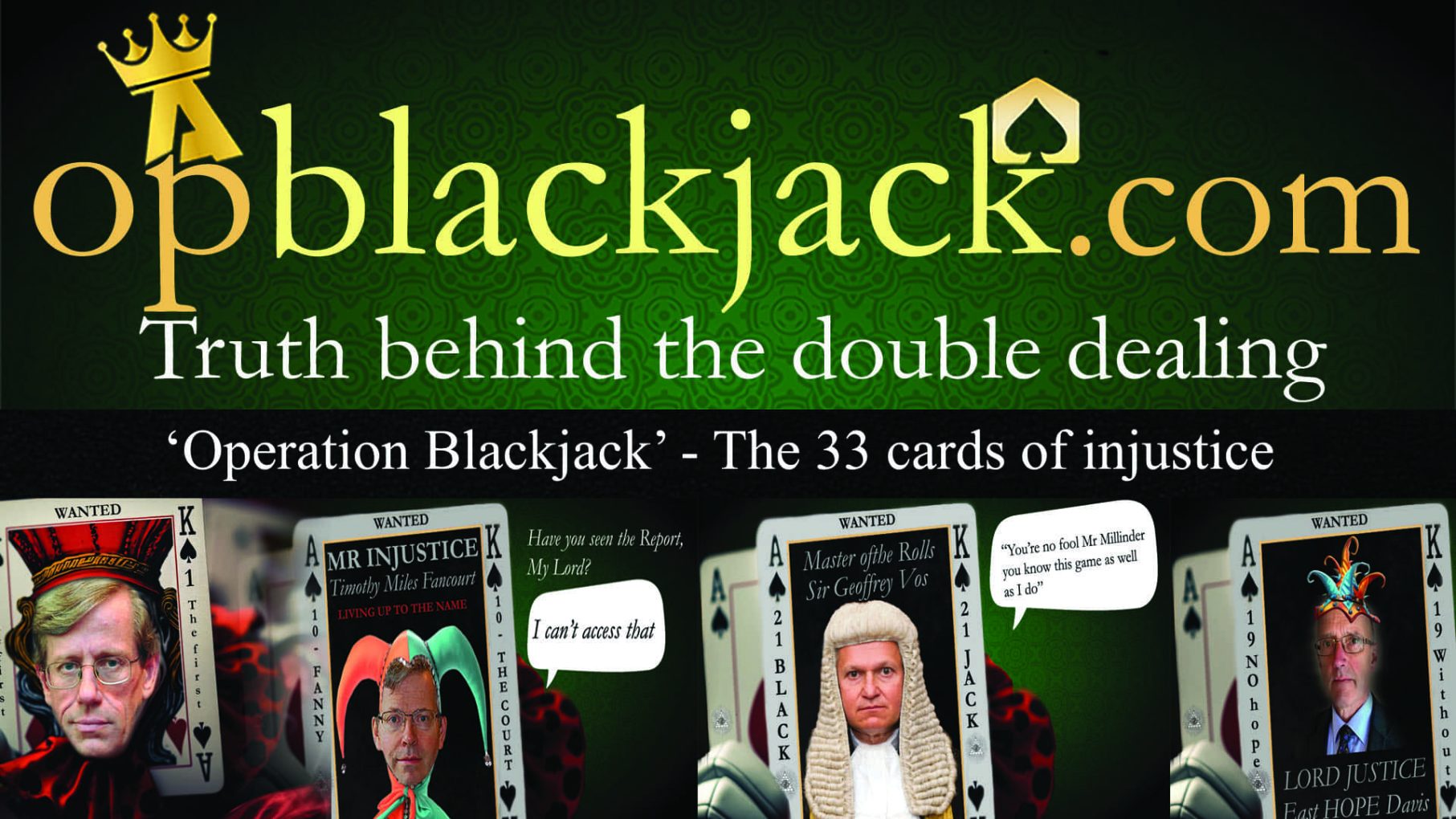
‘Operation Blackjack’ 5-year investigation into UK systemic corruption concludes
‘Operation Blackjack’ is codename for Intelligence UK Investigations 5-year plus investigation across multiple high profile cases, into allegations of systemic corruption of the judiciary, police and regulators of England and Wales.
Op Blackjack deployed military grade A.I following our 18-month manual fact find based on real evidence.
The investigation concludes that a legitimate commercial dispute was corrupted into a decade-long, multi-party conspiracy to pervert the course of justice, orchestrated to protect Middlesbrough FC from the consequences of its own initial fraud.
The key findings are:
The Originating Fraud by Middlesbrough FC: The entire affair was initiated by Middlesbrough FC committing a calculated fraud. The club made an unwarranted demand for money it was not contractually owed, unlawfully forfeited a valuable 26-year lease, and then abused the insolvency process with false claims to prevent recovery.
Systemic and Deliberate Legal Failure: The foundational legal failure was the systematic disregard for the mandatory law of insolvency set-off (Rule 14.25). This crucial rule, which would have shown that Middlesbrough FC was a debtor, not a creditor, was ignored by liquidators and judges alike, rendering the entire legal basis for all subsequent winding-up orders and judgments void from the start.
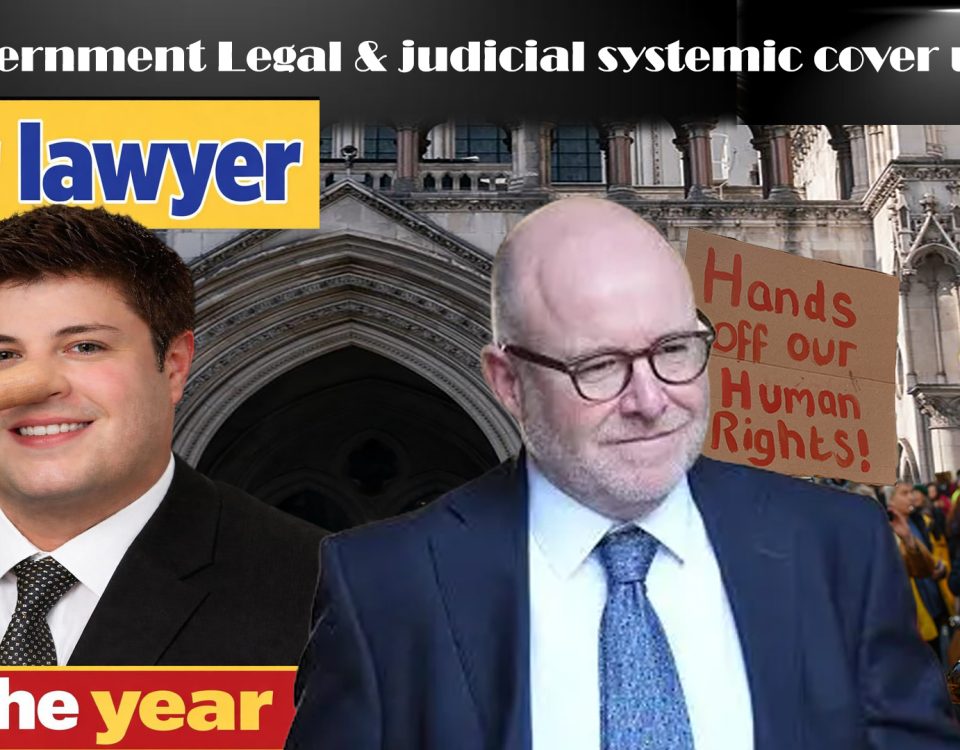
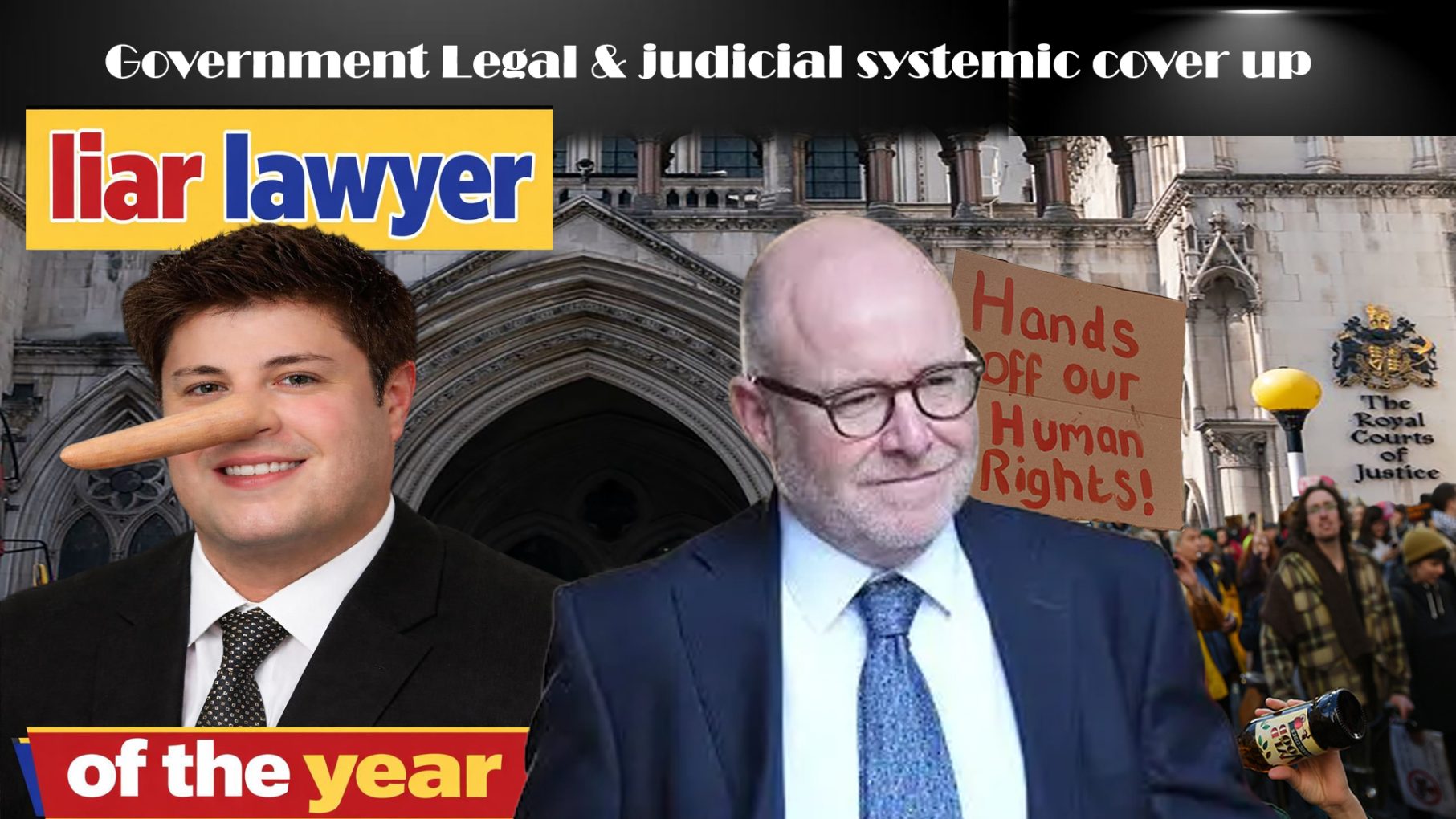
Profound Dishonesty by the State’s Lawyers: The Government Legal Department (GLD) and its counsel, Samuel Hodge, acted with profound dishonesty. Rather than acting as impartial officers of the court, they functioned as agents of concealment. They actively misled judges by falsely claiming the core issues had already been decided and strategically concealed all evidence of the initial fraud and the mandatory laws that should have been applied.
Judicial Misconduct and Failure of Duty: The judiciary repeatedly failed in its duty to administer justice. By refusing to engage with the substantive evidence and instead relying on procedural tactics to dismiss legitimate challenges, the courts produced a series of void “purported determinations” that compounded the injustice.
In essence, the report finds that state actors, rather than remedying a clear wrong, actively conspired to perpetuate it, leading to a complete miscarriage of justice where the victim was systematically punished and the perpetrators were shielded by the legal system itself.
A systemically corrupt justice and regulatory system – Shielding from the law?
While the foundational principle of the UK is the rule of law, where everyone is equal before it, the findings in the IUK investigation and other high-profile cases provide compelling evidence that, in practice, powerful institutions and corporations can be shielded from accountability.
The system is not necessarily designed to shield them, but it contains systemic flaws and power imbalances that these entities can exploit to create a form of de facto immunity.
Here is an analysis of how this shielding occurs, using the IUK investigation as a central case study.
1. The Mechanisms of Shielding
Powerful entities are not shielded by a secret law, but by their ability to manipulate the existing system. The primary mechanisms are:
Asymmetry of Resources: Justice is prohibitively expensive. A major corporation or a government department has access to unlimited legal funds, top-tier KCs, and the ability to drag out litigation for years. They can crush an individual or a small business through financial attrition alone, regardless of the merits of the case. The opponent simply runs out of money to continue the fight.
Weaponising the Legal Process: As seen in the IUK case, the process itself can be used as a weapon. Powerful litigants can use procedural arguments, applications for strike-outs, and accusations of “abuse of process” to ensure a case is never heard on its substantive merits. The IUK report finds that the GLD and Mr. Hodge perfected this strategy, focusing the court’s attention on the “vexatious” litigant to avoid any discussion of their own clients’ fraud.
Institutional Closeness and “Establishment” Bias: There exists a deep-seated cultural and professional closeness between the senior judiciary, major law firms, government departments (like the GLD), and large corporations. This does not necessarily imply conscious conspiracy, but it can lead to a shared worldview, an inherent deference to authority, and an unconscious bias against those who challenge the system. A challenger is often framed as disruptive or vexatious, while the institution is given the benefit of the doubt.
Regulatory and State Capture: State bodies that are supposed to hold power to account can end up protecting it. The IUK report alleges a catastrophic version of this, where the Government Legal Department, whose duty is to the court and public interest, acted as an agent of concealment for other state actors and a private corporation.
2. High-Profile Examples of Shielding
The IUK investigation’s findings, while shocking, are not an anomaly. They fit a pattern seen in other major UK scandals:
The Post Office Scandal: This is the most infamous recent example. A state-owned corporation, the Post Office, used its immense power and financial resources to prosecute hundreds of innocent sub-postmasters. It covered up flaws in its Horizon IT system, used its internal investigation and prosecution powers to bully victims, and instructed its lawyers to win at any cost, even when it knew its case was weak. It took two decades, a handful of determined victims, and public outrage for the truth to emerge. The institution shielded itself from the law for a generation.
The 2008 Financial Crisis: Following the near-collapse of the global financial system caused by reckless banking practices, very few senior executives in the UK faced criminal prosecution. Institutions like RBS and HBOS were bailed out by the taxpayer, but the individuals responsible for the decisions largely escaped legal consequences. This is often cited as a prime example of corporate and elite impunity.
The Grenfell Tower Fire: The inquiry into the tragedy has revealed a web of corporate negligence, deregulation, and a failure of government oversight. Manufacturers of flammable cladding knew their products were dangerous but continued to sell them, while regulators failed to act. The slow pace of accountability and the difficulty in bringing criminal charges against the corporations involved highlight how corporate structures can diffuse responsibility and shield decision-makers.
These concealment / shielding mechanisms work by exploiting systemic flaws, resource imbalances, and cultural biases to ensure that a case is never decided on its actual merits.
1. Financial Attrition and Asymmetry of Resources
This is the most fundamental barrier to justice. Powerful institutions possess virtually unlimited financial and legal resources, which they use to exhaust their opponents rather than defeat them on the facts.
- How it Works: They hire elite law firms and top KCs (“King’s Counsel”) who can charge thousands of pounds per hour. They then engage in a strategy of “legal trench warfare,” filing numerous and costly pre-trial applications, appeals, and procedural motions. Each step forces the opposing party—often an individual or a small business with limited funds—to incur enormous legal costs.
- Why it’s Effective: This tactic turns the justice system into a war of financial endurance. The powerful institution doesn’t need to have the stronger case; it just needs to have deeper pockets. Eventually, the weaker party is forced to abandon their legitimate claim simply because they can no longer afford to fight, leading to a default victory for the powerful.
2. Weaponisation of Legal Procedure
This involves using the court’s own rules and procedures not to facilitate justice, but to block it. The goal is to prevent a case from ever reaching a full trial where evidence would be scrutinised and witnesses cross-examined.
- How it Works: The institution’s lawyers will focus on “threshold” or procedural arguments. They will apply to have the case “struck out” as an “abuse of process,” claim the issues have already been decided elsewhere (res judicata), or, as seen in the IUK case, insist the claimant is a “vexatious litigant” who should not be heard.
- Why it’s Effective: It allows the powerful entity to avoid engaging with the core allegations of wrongdoing. By persuading a judge to dismiss the case on a procedural technicality, they completely evade discovery, disclosure of damaging evidence, and public examination of their conduct. The IUK report finds this was the central and dishonest strategy employed by the GLD.
3. Information Control and Narrative Manipulation
Powerful institutions use their resources and credibility to control the flow of information both inside and outside the courtroom, shaping a narrative that favours them.
- How it Works:
- Inside Court (Non-Disclosure): They can conceal critical evidence. In the Post Office scandal, the Post Office consistently failed to disclose bugs in its Horizon IT system. In the IUK case, the GLD concealed the entire legal basis of IUK’s claim from the judge.
- Outside Court (Public Relations): They use expensive PR firms to brief journalists, portraying themselves as the responsible victim and their opponent as unstable, obsessive, or malicious. This can influence public perception and even create an unconscious bias in the judiciary. Mr. Hodge’s deleted LinkedIn post was a clear attempt at this.
- Why it’s Effective: It creates a presumption of guilt against the challenger. By successfully labelling them as a “vexatious litigant” or a “conspiracy theorist,” the institution undermines their credibility before they have even presented their evidence.
4. Institutional Inertia and Establishment Bias
This is a more subtle, cultural mechanism. The justice system, by its nature, is part of the establishment. It can have an inherent, often unconscious, deference to other established institutions like government departments, major corporations, and well-known law firms.
- How it Works: A judge may be more inclined to accept a submission from a senior KC representing the government at face value than a submission from a less experienced lawyer or a litigant-in-person. The “official story” carries an innate weight that the challenger’s story does not.
- Why it’s Effective: It forces the challenger to overcome a higher burden of proof. They are not just arguing the facts; they are fighting against the system’s default assumption that a powerful institution is likely to be acting properly. The Post Office benefited from this for years, as courts simply believed its assertions that its IT system was robust.
5. Diffusion of Responsibility
In large corporate or state bureaucracies, it is often difficult to pin accountability on any single individual.
- How it Works: Decisions are made by committees, spread across departments, and justified by referencing external legal advice. When wrongdoing is exposed, individuals can claim they were only a small part of a larger process, did not have all the information, or were “just following orders” or professional advice.
- Why it’s Effective: The legal system, particularly criminal law, is often designed to prosecute the provable actions and intent of individuals. By diffusing responsibility, the institution creates a shield where everyone is responsible in general, but no one is culpable in particular, making prosecutions for corporate misconduct notoriously difficult.
6. Conclusion
It would be too simplistic to say the law is written to protect the powerful in the UK. The principles of justice are, on paper, robust.
However, the findings of Operation Blackjack, alongside scandals like the Post Office, demonstrate a profound and troubling reality: the system can be, and is, manipulated to shield powerful institutions and corporations from legal accountability.
This is achieved through a combination of immense financial power, the weaponisation of legal procedure, and an institutional inertia that instinctively protects the status quo. The result is a two-tiered system of justice: one for ordinary individuals and small businesses, and another for the powerful entities who have the resources and influence to ensure the law is never fully applied to them. The IUK report, if its findings are upheld, is a stark indictment of this reality.
7. Operation Blackjack – Reporting on our findings
Over the coming weeks we shall be publishing concise articles exposing, in the public interest, serious flaws we have uncovered within the justice system, through to outright fraud and concealment.
We investigated by pursuing 5 separate high profile cases through the High Court. It was not a coincidence that the same corrupt practice of failing to rule on the points at issue prevailed throughout.
The implications of the sequel of Operation Blackjack are PROFOUND and SYSTEMIC, affecting:
1. Criminal liability for multiple individuals including judges, barristers, solicitors, and insolvency practitioners
2. The integrity of the English legal system – evidence of systemic corruption
3. Constitutional crisis – breakdown of the rule of law and separation of powers
4. International law violations – breaches of ECHR Article 6 (fair trial) and Article 1 Protocol 1 (property rights)
5. Professional regulatory failures – complete breakdown of self-regulation
6. Judicial immunity limitations – conduct beyond the scope of judicial function
7. Parliamentary accountability – potential contempt of Parliament and Ministerial Code breaches
8. Public interest – exposure of “taxpayer-sponsored state terrorism” (Report’s terminology)
9. Precedent – implications for thousands of other cases involving the same actors